How to Choose the Right 3D Printer Filament for Better Printing Results
Discover how to choose the right 3D printer filament for better print quality. Explore material types, storage tips, printer settings, and practical ways to reduce printing problems with suitable filament.
Recent Blogs
- 10 Must-Have Smart Kitchen Gadgets for Modern Homes in 2025
- Essential Warm-Up and Cool-Down Exercises for Every Workout
- TestBlog 02
- Easy Weekend DIYs To Transform Your Space
- Best Skincare Routine for Dry Skin
- Understanding Macronutrients: Protein, Carbs, and Fats Explained
- Choosing the Right Rug for Every Room
By Noah Bennett
·October 26 17
Have you ever spent hours preparing a 3D model, only to discover that the finished print has rough surfaces, weak layers, or unexpected imperfections? These problems can be frustrating, especially when you have invested time, effort, and money into your project. While printer settings and model design play important roles, the material you choose can make a significant difference.
Finding the right 3D Printer Filament is one of the most important steps toward achieving consistent, high-quality results. Whether you are printing decorative objects, practical household accessories, prototypes, or replacement parts, understanding your material options can help you avoid common mistakes.
For many beginners and experienced makers alike, PLA Filament is a useful starting point because it is generally easy to print and available in a wide variety of colors and finishes. However, selecting the right material involves more than choosing an attractive spool. Temperature requirements, storage conditions, printer compatibility, and the intended use of your finished object all deserve attention.
Common Problems with 3D Printing Materials
Even a well-maintained printer can produce disappointing results when the filament is unsuitable or improperly handled. Recognizing common problems is the first step toward improving print quality.
Poor Layer Adhesion
If your print separates between layers or breaks more easily than expected, the material may not be bonding correctly. Incorrect nozzle temperatures, excessive cooling, or unsuitable printing speeds can contribute to weak layer adhesion.
Stringing and Surface Imperfections
Thin strands of plastic between printed sections can make an object look untidy. Uneven extrusion, incorrect retraction settings, and moisture in certain materials may contribute to stringing and other surface defects.
Warping and Failed Prints
Some materials shrink as they cool, causing corners to lift away from the build plate. Poor bed adhesion, temperature fluctuations, and unsuitable printing conditions can increase the risk of warping.
Inconsistent Results
A print may look excellent one day and disappointing the next. Differences in material quality, storage conditions, spool handling, and printer settings can all influence consistency.
These challenges are not always caused by the filament alone. However, choosing a suitable material and storing it correctly can eliminate several avoidable problems.
Why Your Choice of Filament Matters
Different printing materials have different physical properties. Some are designed for ease of use, while others offer greater flexibility, heat resistance, or mechanical strength.
PLA Filament is popular because it generally prints at relatively accessible temperatures and often works well for decorative models, prototypes, toys, and everyday objects that do not require substantial heat resistance. Its ease of use makes it an attractive choice for beginners.
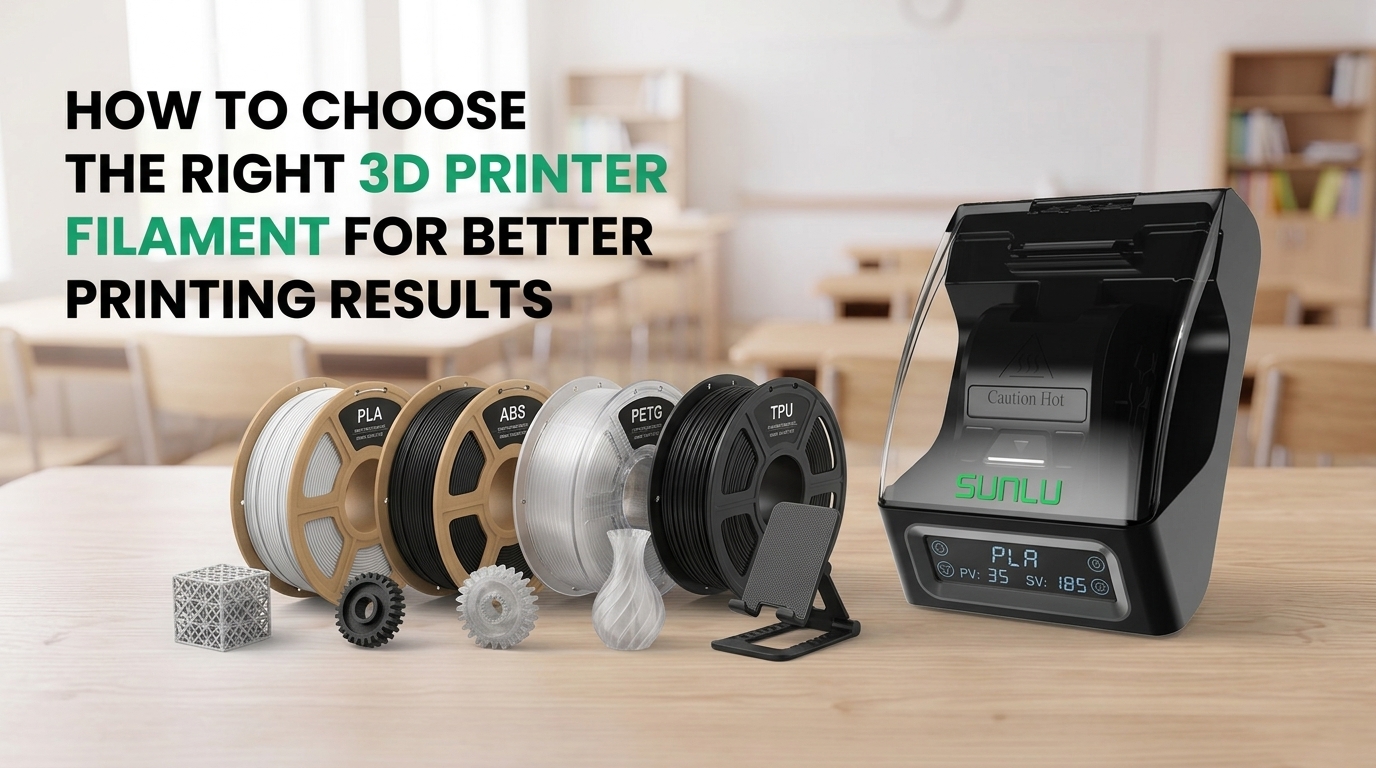
Other materials, such as PETG, ABS, and TPU, serve different purposes. PETG can offer a useful balance of strength and durability, ABS may suit certain heat-resistant applications when printed under appropriate conditions, and TPU is valued for its flexibility.
The important point is that no single 3D Printer Filament is ideal for every project. A decorative figurine has different requirements from a functional bracket or a flexible protective cover. Matching the material to the intended application helps improve the likelihood of a successful print.
Practical Ways to Improve Your 3D Printing Results
1. Match the Material to Your Project
Before purchasing filament, think about what your finished object needs to do.
Decorative models: PLA Filament is often a practical choice because it is available in many colors and finishes.
Prototypes: PLA can work well for visual models and basic design testing.
Functional components: Consider the strength, flexibility, and temperature requirements of the application before selecting a material.
Flexible objects: TPU may be more appropriate when the design requires bending or elasticity.
Also, check the manufacturer's recommendations for nozzle temperature, bed temperature, and supported printer configurations. These details can help you select a suitable material without unnecessary experimentation.
2. Store Filament Properly
Moisture can affect many 3D printing materials, although the extent of the problem varies by material and environment. Some filaments may produce popping sounds, rough surfaces, or inconsistent extrusion when they absorb moisture.
Keep your spools in a dry, sealed container when they are not being used. Suitable desiccants can help control moisture inside storage containers, and a compatible filament dryer may be useful when material requires drying.
Follow the manufacturer's drying instructions carefully. Excessive heat can damage a spool or material, so avoid assuming that every filament needs the same temperature or drying time.
3. Fine-Tune Your Printer Settings
Even high-quality 3D Printer Filament needs suitable printing conditions. Start with the manufacturer's recommended settings, then adjust individual parameters gradually.
Check nozzle temperature, bed temperature, print speed, cooling, and retraction settings. If you experience poor adhesion, verify that the build surface is clean and correctly prepared.
Changing one setting at a time makes it easier to identify the cause of a problem. A small test print can also help you evaluate a new material before committing to a large project.
4. Consider Filament Quality and Compatibility
Price is important, but the cheapest spool may not always provide the best overall value. Inconsistent diameter, poor winding, or variations in material quality can contribute to feeding and extrusion problems.
Before buying, review the filament diameter, dimensional tolerance, recommended temperatures, spool dimensions, and compatibility with your printer. Check whether the spool fits your holder or automatic material system if your setup requires one.
For PLA Filament, you may also want to compare matte, silk, glossy, and specialty finishes. These options can change the appearance of your finished model without requiring a completely different printing process.
When a Premium Filament Option Makes Sense
Once you understand your project's requirements, choosing a reliable supplier becomes easier. Sunlu US is worth exploring if you are looking for 3D printing materials and accessories for different types of projects.
Rather than selecting a spool based only on its color or price, compare the product specifications, recommended settings, material properties, and compatibility with your printer.
A suitable PLA Filament can be a sensible choice for everyday printing, particularly when you want to produce decorative pieces, prototypes, or general-purpose models. For more demanding applications, compare alternative materials according to the finished object's expected conditions.
Sunlu US also offers options across the broader 3D printing materials category, allowing buyers to explore products according to their equipment and project requirements. The most useful choice is the one that delivers dependable results for your specific needs, rather than simply the one with the most impressive product description.
Benefits of Choosing the Right Filament
Selecting a suitable material can improve your overall printing experience in several ways.
More consistent prints: Appropriate material selection and storage can help reduce avoidable printing problems.
Better surface appearance: Suitable settings and reliable filament can help produce cleaner-looking models.
Less wasted material: Test prints and correct settings can reduce the need to reprint failed projects.
Greater design flexibility: Different materials and finishes allow you to create objects for a wider range of purposes.
Better value over time: Reliable results can help you make more productive use of your printer and supplies.
A quality 3D Printer Filament is only one part of the process, but it works alongside good printer maintenance, careful preparation, and appropriate settings. When these factors come together, achieving repeatable results becomes easier.
Make Your Next 3D Printing Project More Successful
Choosing the right material does not need to be complicated. Start by identifying the purpose of your project, checking your printer's compatibility, and comparing the properties of available filaments.
PLA Filament is often a sensible starting point for everyday printing, while other materials may be better suited to applications that require additional flexibility, durability, or heat resistance. Store your spools properly, follow recommended printing settings, and test new materials before beginning larger jobs.
If you are comparing suppliers, Sunlu US is one option to consider when exploring 3D printing materials and accessories. Review individual product specifications and choose the material that best matches your printer and intended application.
Ultimately, better printing results come from making informed decisions at every stage. With suitable filament, careful preparation, and a little experimentation, you can reduce avoidable frustrations and get more value from every 3D printing project.
Comment:
Your email address will not be published. Required fields are marked *



You Might Also Like